
Akmé
Your race, turned into a product.
Context
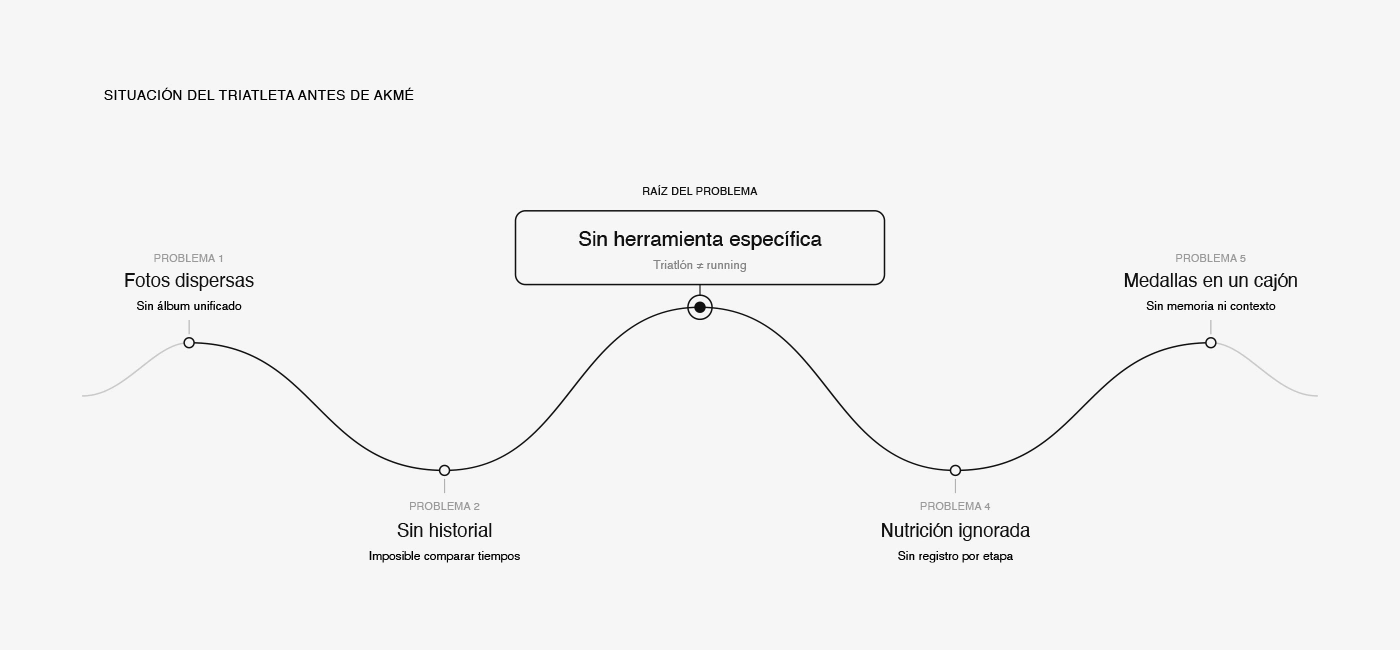
Triathletes generate a huge amount of data throughout their training and competitions: times, routes, nutrition, results, and personal records. Yet this information is often scattered across different apps, spreadsheets, photos, and notes, making it difficult to build a complete picture of athletic progress.
The problem
Existing tools solve individual needs — tracking workouts, analyzing routes, or calculating pace — but none of them bring the complete triathlon experience together. Athletes end up manually reconstructing their history and losing the context behind each race.
My role
I led the project end-to-end, from defining the problem to designing and developing the functional product.
- Product strategy
- UX and UI design
- Information architecture
- Feature definition
- Front-end development
- Backend integration
- Testing and iterative validation
As a triathlete myself, my domain knowledge helped me identify real user needs and turn them into product decisions, reducing the reliance on assumptions and external validation.
The solution
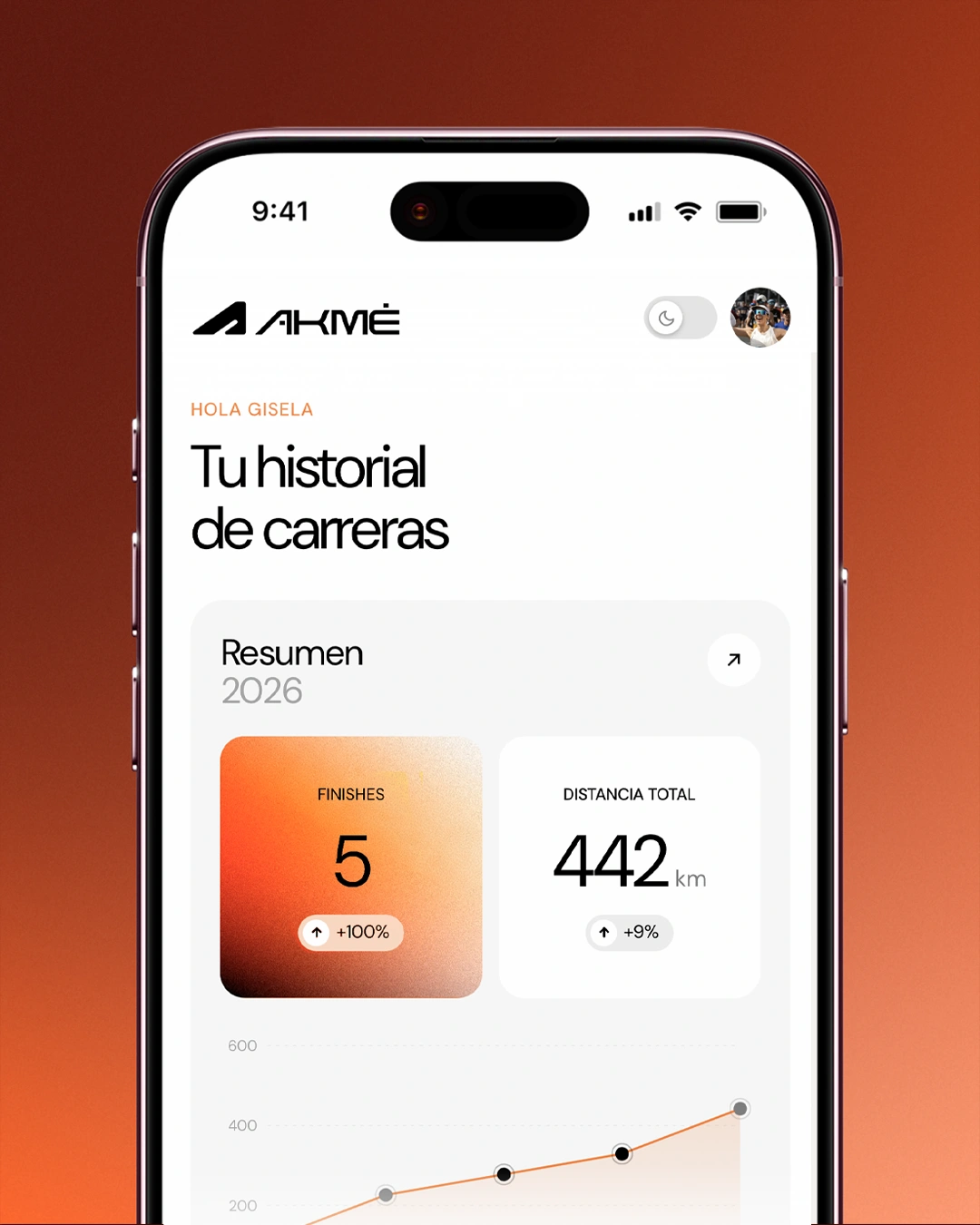
AKMÉ was conceived as a specialized platform for triathletes, bringing athletic tracking, competition history, and performance analysis together in a single experience. The first version is organized around six core modules:
- Performance evolution and metrics
- Personal records
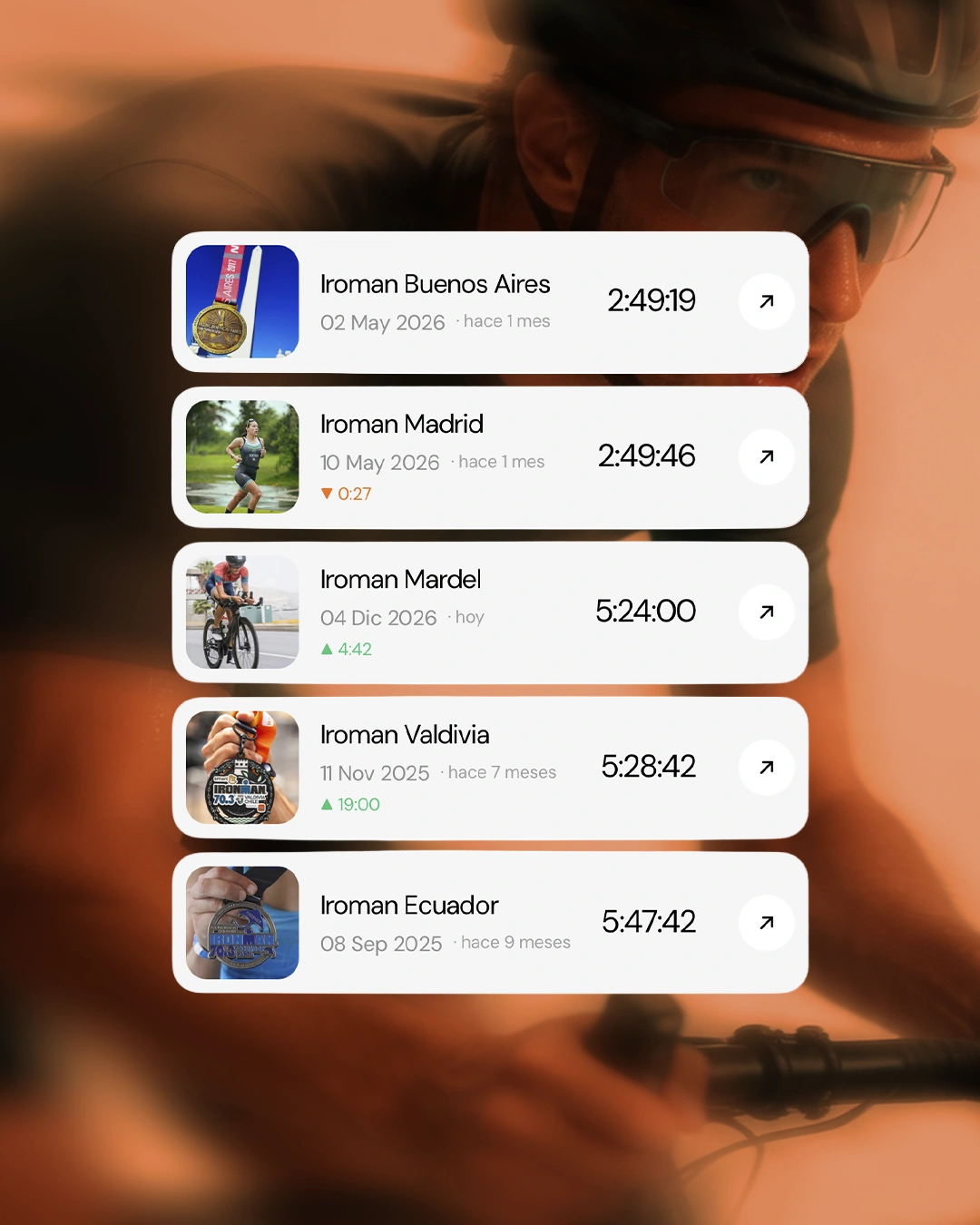
- Race history
- Cumulative route map
- Nutrition by race stage
- Predictive time calculator
Each module answers a question a triathlete asks after training or competing: How am I progressing? What did I learn from this race? How far did I actually go? How did my nutrition affect my performance? What do I need to improve to reach my next goal?
How it was built
The product was developed using an AI-assisted Product Engineering approach. The goal wasn't simply to write code faster, but to accelerate the cycle between idea, implementation, and validation. Each iteration followed the same process:
Problem → Design → Implementation → Testing → Iteration
Claude Code was used as the primary development tool, while product, user experience, and architecture decisions were defined and validated throughout the process.
Stack
React 19 · TypeScript · Vite · Tailwind CSS · Supabase (Auth + Database) · Leaflet + CartoDB
Outcome
More than an application, AKMÉ became a way to validate a product development approach. The project demonstrated how an AI-assisted Product Engineering workflow can turn a product hypothesis into a functional product within weeks, accelerating learning and reducing the cost of validation before making larger investments. The main takeaway was that development speed depends less on the technology stack and much more on how clearly the problem is defined.
What I learned
AI accelerates implementation, but it doesn't replace product judgment. The ability to identify a meaningful problem, define a coherent solution, and validate each decision remains the real differentiator. In AKMÉ, understanding the problem from personal experience made it possible to design a highly specific product — something that would have been much harder to achieve from an external perspective.